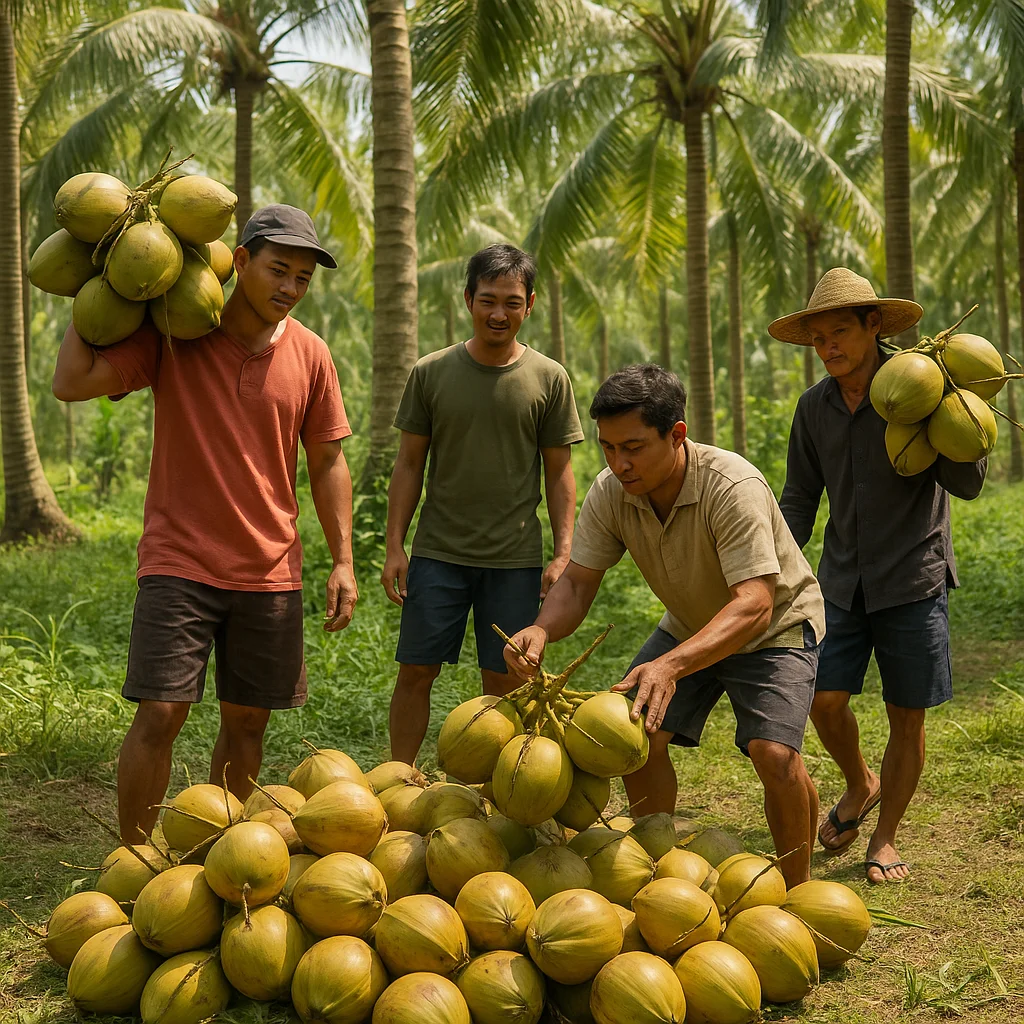
The coconut palm (Cocos nucifera) is a familiar sight in tropical landscapes, thriving along the coasts of the Indian and Pacific Oceans. It grows up to 30 meters tall and can live for a century. Its arching fronds provide shade and its floral nectar attracts pollinators. The tree is adapted to sandy, salty soils and tolerates wind and drought. Palms begin bearing fruit after 6–10 years and can produce dozens of nuts each year.
Legend says sailors called the coconut palm the ‘tree of life’ because every part is useful: sails from leaves, soup from its milk and charcoal from the shells. Coconuts were carried along ancient trade routes as a source of hydration and food, while the nuts were sold in Europe as exotic fruit. Many cultures still use coconuts in rituals as symbols of fertility and prosperity.
Despite its ubiquity, the coconut palm is sensitive to environmental changes. Sustainable farming initiatives encourage agroforestry where coconuts are intercropped with cacao, bananas and vegetables to improve biodiversity and soil health. Scientists are exploring coconut oil as a biofuel and new applications of coconut fibres in bioplastic production.
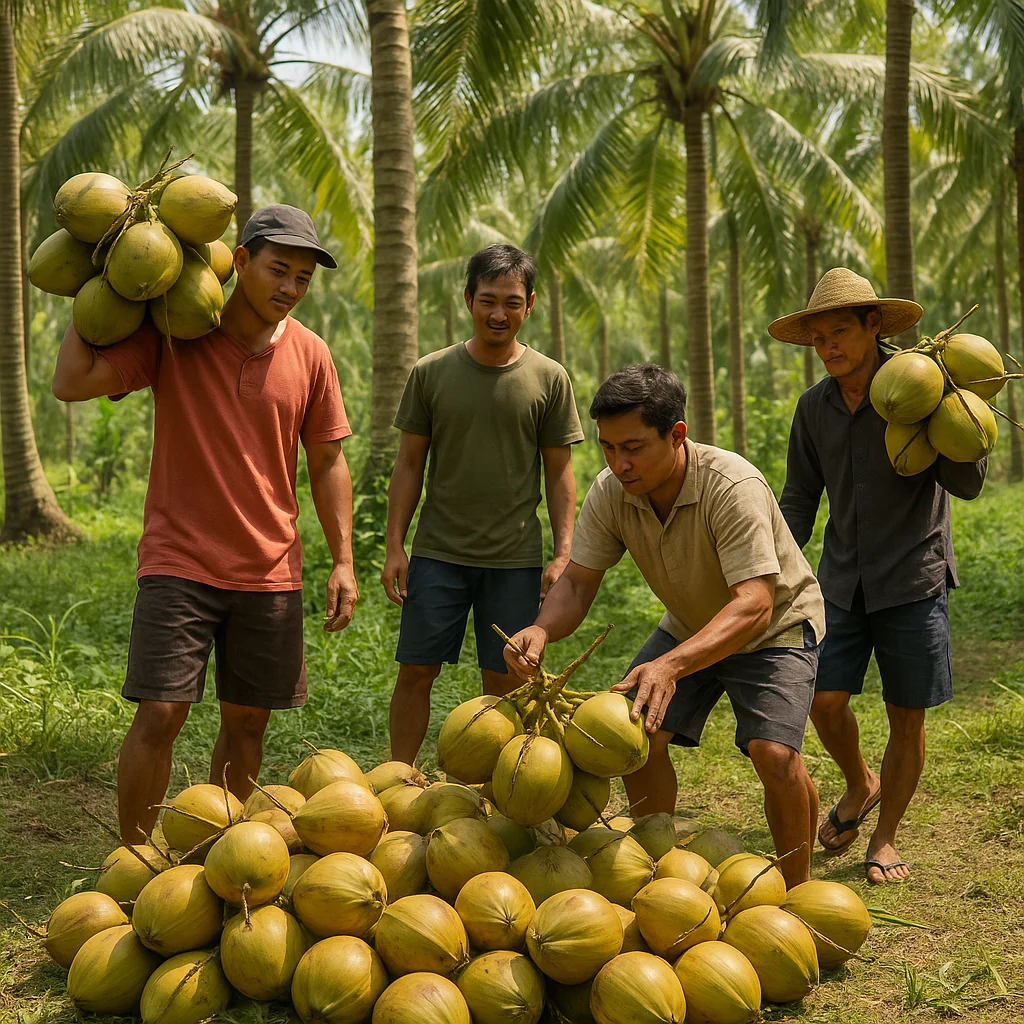
Archaeological and genetic evidence suggests the coconut was domesticated independently in two regions – the southern Indian Ocean and Southeast Pacific. Sailors carried the nuts between islands as a source of food, drink and timber. Rich in fats and fibre, coconuts were a vital energy source for coastal communities. The fibrous husks were woven into rope and mats, and the wood used to build houses and boats.
Today coconut cultivation is a major industry in the tropics. Harvesting involves picking ripe nuts, removing the outer husk, separating the hard shell and flesh and processing it into milk, oil, flour, sugar and other products. The flesh is dried into copra for oil extraction or ground into flour. The sweet flower sap is cooked into coconut sugar. No part is wasted – shells and fibres are used for fuel, textiles and growing mediums. Coconut plantations also store carbon; research estimates a single palm sequesters between 37 and 56 kg of carbon per year, supporting climate goals.
Coconuts have a rich cultural heritage. In many cultures they symbolize fertility and life, and are woven into celebrations, cuisine and medicine. Today coconuts feature in global trade – from fresh nuts and coconut milk to cosmetics and nutritional supplements. Their versatility and sustainable production maintain the coconut as a treasured “fruit of life”.