Dense, fudgy brownies with rich chocolate and caramel notes. Coconut sugar replaces white sugar, imparting deeper flavor and darker color. The brownies stay moist inside with a crisp top.
Ingredients
- 150 g dark chocolate
- 100 g butter
- 200 g coconut sugar
- 3 eggs
- 80 g flour
- 30 g cocoa powder
- 1 tsp vanilla
- pinch of salt
Instructions
- Preheat oven to 180 °C and line a pan with parchment.
- Melt chocolate and butter together.
- Stir in coconut sugar.
- Beat in eggs one at a time.
- Fold in flour, cocoa, vanilla and salt.
- Pour into pan and bake 20–25 minutes.
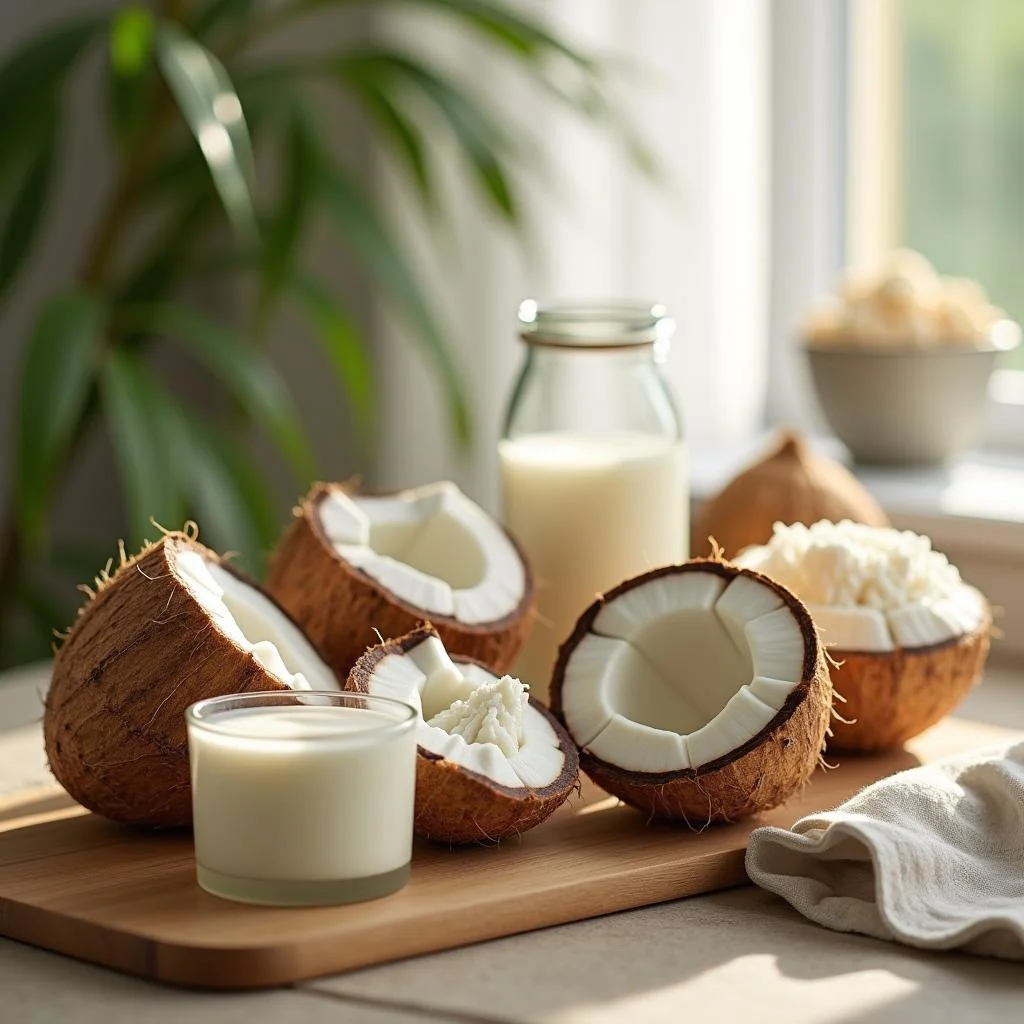
As a culinary ingredient, coconut is both delicious and functional. It contains medium‑chain triglycerides (MCTs) that provide quick energy and may support appetite regulation. Adding coconut milk, flour or sugar to recipes boosts fiber and natural mineral content while enriching flavour without refined fats. Many chefs incorporate coconut products into gluten‑free and vegan dishes, as coconut butter and milk substitute for dairy products.
This culinary creation further highlights how coconut can balance flavors and provide healthy energy. Coconut products enrich dishes with fiber and natural fats and are excellent for those seeking gluten‑free or vegan alternatives. Historically, sailors carried coconuts as a nourishing meal on long voyages.
Coconut’s versatility extends far beyond the uses highlighted in this recipe. It features in traditional and modern dishes alike—from tropical desserts and drinks to hearty mains and sides. In cosmetics and personal care, coconut nourishes skin and hair and forms the basis of many natural products. In industry, coconut fibres and shells provide sustainable feedstock for bioplastics, textiles and biofuels. These qualities make coconut one of the most valuable plants in the tropical world.